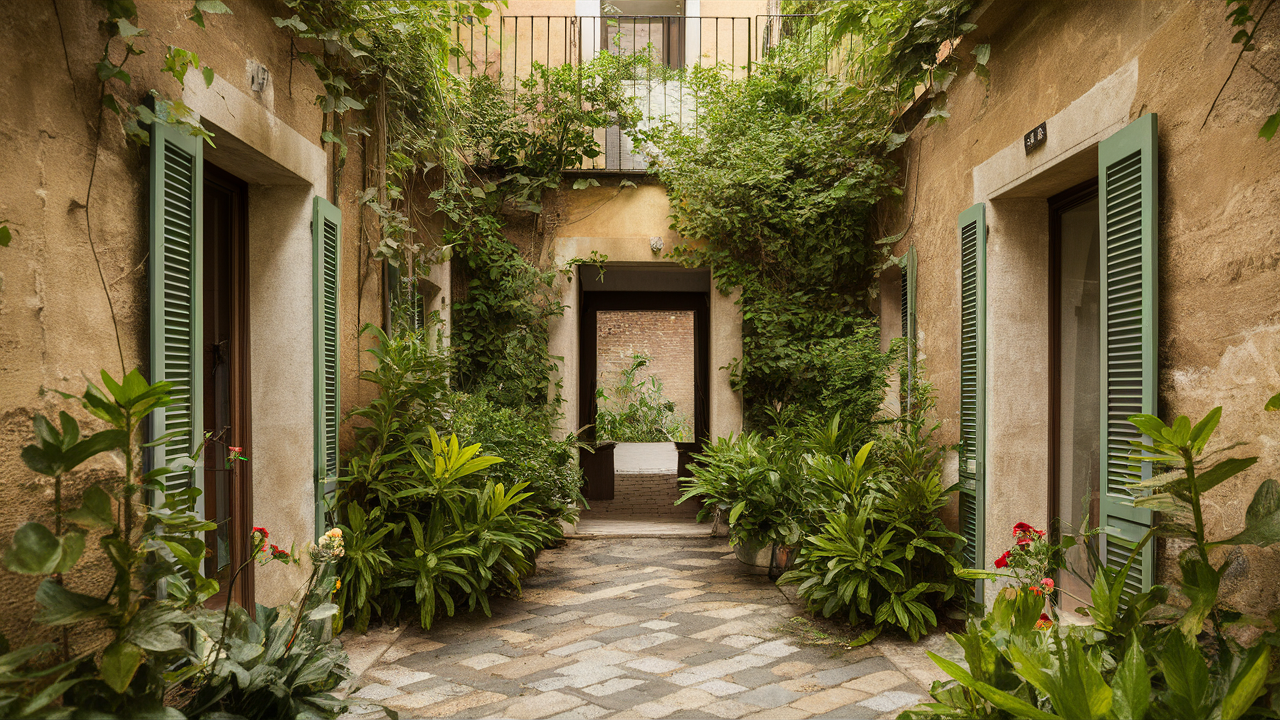
29 Italian Courtyard Gardens You will Love
There’s something irresistible about the charm of an Italian courtyard garden. Maybe it’s the way stone walls hold centuries of history, or how citrus trees bring both fragrance and shade, or perhaps it’s the simple fact that Italians have mastered the art of living beautifully outdoors.
Whatever it is, the courtyard garden has become one of the most beloved styles of outdoor design, blending elegance with functionality.
In this article, we’ll dive into 29 stunning Italian courtyard garden ideas you’ll fall in love with, while also giving you tips to adapt them into your own home—whether you live in a villa, a city apartment, or a suburban house with just enough space for a patio.
1. Stone-Paved Courtyards with Rustic Charm
One of the most recognizable features of an Italian courtyard garden is the use of stone paving. The irregular stones not only look gorgeous but also feel timeless. They provide durability for centuries and lend a rustic yet sophisticated character. When paired with terracotta pots filled with rosemary or lavender, the space feels like a small Tuscan retreat.
Think of it like wearing leather boots—they scuff over time, but that only makes them more charming. Stone paving develops character with age, making your courtyard look better year after year.
2. Lemon and Orange Trees for Color and Fragrance
Italian courtyards often include citrus trees in terracotta planters. These not only bring vibrant pops of green and yellow but also fill the air with their refreshing scent. Citrus trees thrive in containers, which means even if you don’t have a large garden, you can still create a Mediterranean vibe.
In fact, many Italian noble families kept citrus trees in movable pots so they could wheel them indoors during winter—a tradition you can copy with rolling plant stands. Plus, nothing says “dolce vita” like plucking your own lemon for a fresh spritz.
3. Central Fountains as a Statement Piece
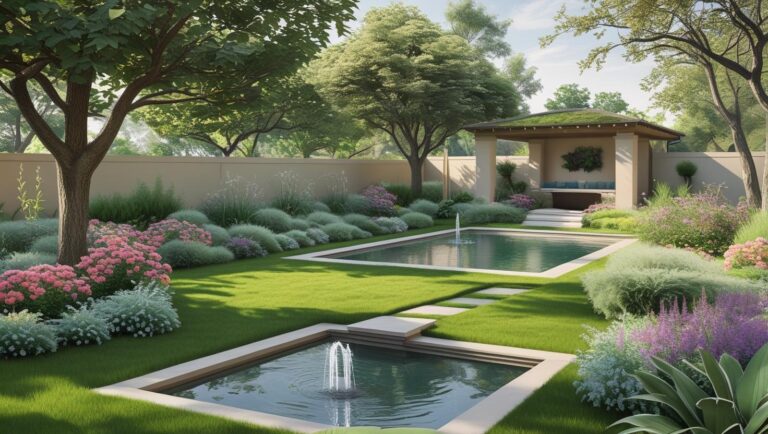
Water is an essential element in Italian courtyard gardens, often showcased through a central fountain. The gentle sound of trickling water not only cools the air but also adds serenity. Fountains in Italy range from elaborate marble sculptures to simple stone basins.
You don’t need a Renaissance artist on hand—modern fountains come in all sizes, and even a tabletop version can capture the same ambiance. The point isn’t grandeur but the soothing rhythm of water, which has a meditative quality.
4. Terracotta Pots Everywhere
It’s hard to picture an Italian courtyard without terracotta pots. Their warm tones complement the coolness of stone walls and pavements, and they look incredible filled with olive trees, geraniums, or climbing ivy. Terracotta breathes, meaning roots stay healthy, which is why it has remained a staple material for centuries.
I once tried plastic planters for convenience, but they lacked the soul of terracotta. Italians know that sometimes beauty and tradition matter just as much as function.
5. Climbing Vines on Walls
Italian courtyards excel at vertical gardening. Climbing vines like jasmine, bougainvillea, or ivy transform plain walls into lush green tapestries. Not only do they provide shade and cooling in summer, but they also blur the lines between nature and architecture.
It’s almost like your walls are wearing a green velvet coat. And the scent of jasmine in the evening? Utter magic.
6. Shaded Pergolas
Pergolas are essential for creating shade in the hot Italian summers. Covered in grapevines or wisteria, these structures provide a dappled light that makes sitting outside a daily joy. Italians often place their dining table beneath the pergola, making it the heart of the courtyard.
You don’t need a grand villa to enjoy this—small pergolas work wonders even on urban patios, giving you both shade and a natural focal point.
7. Simple Wooden Furniture
Forget glossy, modern patio furniture. In Italy, courtyards often feature weathered wooden chairs and tables that look like they’ve hosted decades of laughter and meals. It’s furniture that invites you to sit down with a glass of wine and linger.
The secret isn’t perfection—it’s comfort. A slightly uneven wooden bench may look rustic, but it feels like home.
8. Herb Gardens for Flavor and Fragrance
Every Italian courtyard worth its salt includes a herb corner. Basil, rosemary, thyme, and sage are staples not just for cooking but also for their aroma. The beauty of herbs is that they thrive in small pots, making them perfect for even the tiniest courtyards.
When you’re cooking pasta, imagine stepping outside to snip fresh basil leaves—it’s the kind of everyday luxury Italians take for granted.
9. Olive Trees as Symbols of Peace
The olive tree is deeply symbolic in Italy, representing peace and prosperity. Having even a single potted olive tree in your courtyard connects you to centuries of Mediterranean tradition. They’re surprisingly hardy and adapt well to containers.
Plus, their silvery leaves shimmer beautifully in the sunlight, almost like jewelry for your garden.
10. Mix of Flowers in Bold Colors
Italians are not shy about using bold flowers. Geraniums, roses, and bougainvillea often spill over pots and railings. Their bright reds, pinks, and purples contrast dramatically with stone walls, creating that postcard-perfect look.
The goal isn’t a manicured garden but an explosion of color that feels alive.
11. Courtyards with Archways
Many Italian homes use stone or brick archways to frame their courtyards. These arches don’t just look romantic—they also guide the eye and create a sense of intimacy. Even if your home doesn’t have natural arches, you can mimic the effect with trellises covered in vines.
Walking through an arch into a courtyard feels like entering another world, one where time slows down.
12. Candlelit Corners
At night, Italians often use candles and lanterns to illuminate their courtyards. This soft, flickering light creates an atmosphere that’s both romantic and calming. You don’t need fancy lighting systems—just a few glass lanterns with tea lights will do the trick.
Imagine sipping wine while surrounded by candlelight and the scent of blooming jasmine. That’s the definition of la dolce vita.
13. Gravel Paths and Flooring
Some courtyards replace stone paving with gravel flooring, which crunches satisfyingly underfoot. Gravel also improves drainage and reflects light, making spaces feel brighter. It’s a practical and affordable choice that still feels distinctly Italian.
Walking on gravel gives that subtle sensory reminder that you’ve stepped into a special space.
14. Statues and Sculptures
Italian courtyards often feature classical statues, whether of cherubs, saints, or abstract forms. They serve as both art and guardians of the garden. Even a small bust tucked among plants can add character and history.
Statues remind us that gardens aren’t just about plants—they’re about culture, storytelling, and personality.
15. Cozy Outdoor Dining Spaces
Meals are central to Italian life, and courtyards often include tables for al fresco dining. A simple wooden table, surrounded by mismatched chairs, becomes a gathering spot for family and friends.
In many ways, the dining table is the soul of the courtyard—it’s where laughter happens, stories are shared, and food brings people together.
16. Small Courtyards with Big Personality
Not every Italian courtyard is sprawling. Many are tucked between city walls and measure just a few meters across. Yet they feel grand thanks to clever use of plants, pots, and furniture.
This proves you don’t need space—you need imagination. Even a tiny balcony can borrow Italian style.
17. Hanging Planters for Vertical Greenery
Italians use every inch of space, including vertical walls. Hanging planters filled with herbs or flowers add greenery without taking up floor space. This is perfect for small urban courtyards where ground area is limited.
It’s like accessorizing your walls the way you’d wear earrings—small details make a big difference.
18. Rustic Brick Walls
Brick is another classic Italian material. Exposed brick walls bring warmth and texture to a courtyard, making it feel cozy yet historic. Pairing brick with greenery creates that irresistible old-world charm.
It’s a reminder that imperfection—like uneven bricks—can be its own form of beauty.
19. Garden Benches for Relaxation
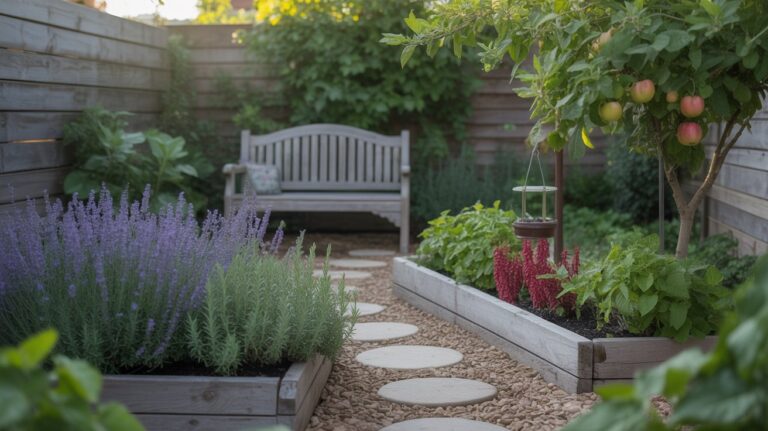
Simple stone or wooden benches invite moments of pause. Italians love to sit outside, whether to drink espresso or simply watch the world go by. Adding a bench under a tree or against a wall makes your courtyard feel welcoming.
Sometimes the best design choice is simply creating space to sit and breathe.
20. Wisteria-Covered Spaces
Few sights are as enchanting as a courtyard draped in wisteria blossoms. The cascading purple flowers create a dreamy canopy in spring. Wisteria grows quickly and thrives on pergolas, making it perfect for creating shade.
The scent alone can transport you straight to Florence.
21. Rustic Outdoor Kitchens
Some Italian courtyards include small outdoor kitchens, often with a wood-fired oven. While you might not build a full oven, adding a grill or outdoor counter space can give your courtyard a similar vibe.
Cooking outside turns mealtime into an event, not just a routine.
22. Water Basins for Birds
Italians value harmony with nature, and small stone basins for birds are a common feature. These basins provide water for wildlife and add charm to the garden. Watching birds splash around feels like free entertainment.
It’s also a gentle reminder that gardens aren’t just for us—they’re for every living thing.
23. Courtyards with Balconies Overlooking
Many Italian courtyards are surrounded by balconies, where residents add plants and flowers that cascade downward. This creates layers of greenery, making the courtyard feel lush and alive.
Think of it as a living theater, with balconies as the stage boxes.
24. Iron Gates and Railings
Wrought iron gates are another hallmark of Italian courtyards. Their intricate patterns add elegance and privacy without blocking the view. Even simple black iron can feel romantic when paired with greenery.
Iron details are like jewelry for your home—small, but transformative.
25. Seasonal Decorations
Italians decorate their courtyards for the seasons, whether with pumpkins in autumn, poinsettias in winter, or citrus in summer. This keeps the space dynamic and tied to the rhythms of life.
Changing décor is a simple trick to keep your courtyard always feeling fresh.
26. Courtyards with Pools or Basins
Some larger courtyards include reflecting pools or small basins, which cool the space and add elegance. The reflection of plants and architecture in water doubles the beauty of the garden.
Even a small water feature can mimic this sense of calm.
27. Mosaic Flooring
Mosaic tiles are a distinctly Italian art form. In courtyards, mosaic floors add intricate patterns and storytelling. From simple geometric designs to elaborate depictions, mosaics elevate the courtyard to an art gallery.
It’s proof that even the ground beneath your feet can be a canvas.
28. Mix of Old and New
Many modern Italian courtyards blend historic architecture with contemporary furniture or art. This mix of old stone with modern minimalism creates dynamic, inspiring spaces.
It shows that tradition and innovation don’t compete—they complement each other.
29. Secret Garden Courtyards
Some of the most enchanting courtyards are hidden behind simple doors, accessible only to those who know where to look. These secret gardens often combine all the elements—plants, fountains, seating—into small, magical worlds.
Creating your own version can be as simple as using tall plants or partitions to make your courtyard feel private and mysterious.
Final Thoughts
Italian courtyard gardens are not just about design—they’re about lifestyle. They remind us to slow down, savor meals outdoors, enjoy the scent of herbs, and embrace imperfection as beauty. Whether you have a sprawling villa or a tiny urban patio, you can borrow elements of Italian courtyard style to create your own sanctuary.
The magic lies not in size or expense but in how the space makes you feel. Add a lemon tree, light a candle, and suddenly you’ll understand why Italians treat their courtyards as the true heart of their homes.